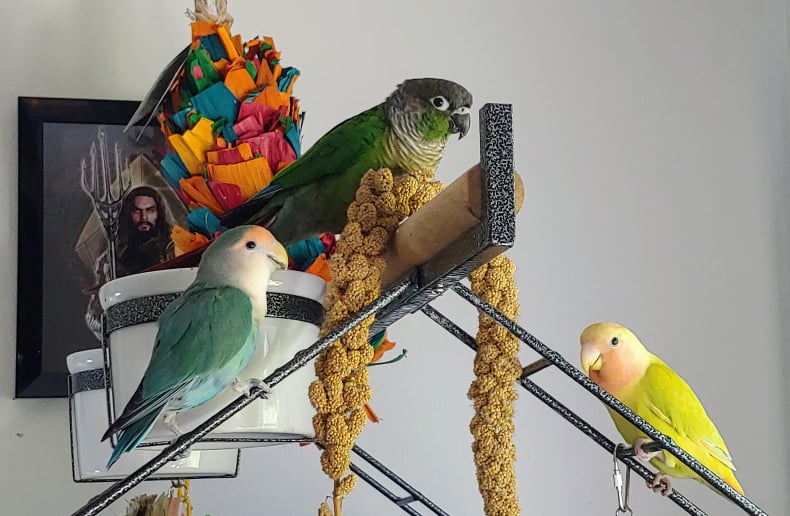
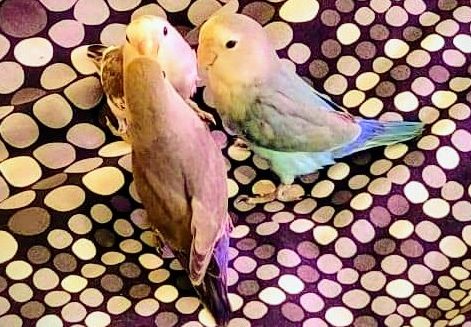
Can we have only one individual at home? Do we absolutely have to have two or more lovebirds?
The answer is yes and no! Lovebirds are gregarious birds. A lovebird in a pair or group will have great group interaction and socialization but will be more independent of its human. A lone lovebird will be easier to connect with, but will require more time with you! Think about it before adopting.
Nutrition
Les inséparables
In the wild, lovebirds feed on seeds, berries, fruits, grains, grasses, leaf buds, and agricultural crops of corn, maize and figs. They are also opportunists as they will sometimes eat small insects. A lovebird’s diet will consist of 1 1/2 to 2 ounces (45-60 grams) of feed daily for a single bird.
That being said, what do lovebirds eat in the comfort of a human house? You will read different beliefs and opinions on that matter. Here I will state what Pawsitive Plume offer for their sweetheart as a result of veterinary school teachings as well as personal experiences.
Pellets
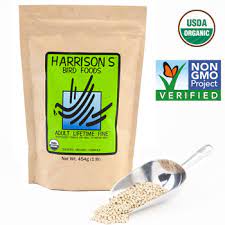
A different variety of pellets (small dry compressed food)is available on the market. You will see several sizes, colors and smells offered in pet stores. The high quality brands state that they are a complete and balanced diet usually distinguished by bird sizes (small, medium, large parrots). A lot of market available brands are not complete and do add a lot of coloring and preservatives to make it attracting to a birds eye. The idea behind a pellet food is to have all the nutrient and vitamins equal in each bite, making it impossible for the bird the ‘choose’ their favorite pieces just like in seed diets.
Following that information, Pawsitive Bird do recommend a high quality lovebird adapted pellet diet that does not contain (or as less as possible) coloring and preservatives as the base of the diet. You will need to add fresh food to make it complete (as described in the next chapter). Good examples of medium to high quality pellet diets are Harrison’s Fine and Hari Tropican. What I personally love about Harrison’s is the fact that their diet is ‘cold pressed’ meaning that they keep a lot of the vitamins intact unlike cooked pellets.
Fresh Food
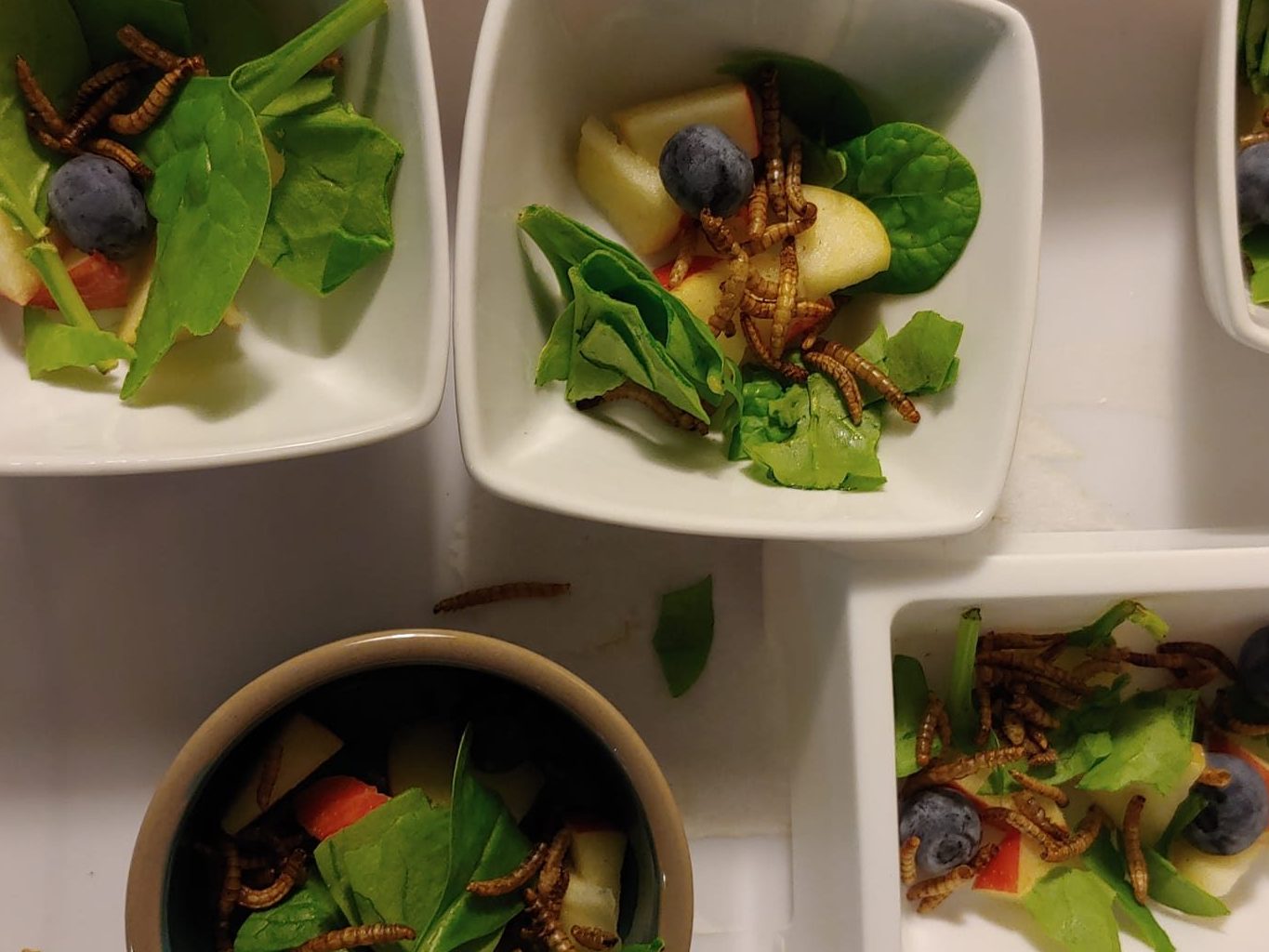
*Article to come*
Fresh food
sprouting seeds and Steps to make it safe
Seeds and nuts
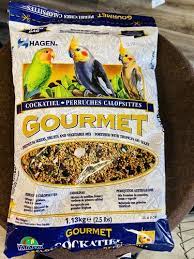
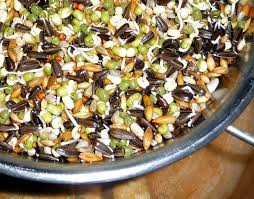
If you got to a pet store, the most common bird diet you will find is a mix of seeds and nuts. It is important to understand that, just like children’s, bird will choose to eat first/only the pieces that they prefer. This often leads to nutritional deficiencies, and can even make their body go in liver failure. That being said, seeds are also a perfect enrichment and treat food. For example, Millet is often used by trainers to coach the bird into doing something. As part of a good diet, you should use seeds only in small quantity and be thought to be more as an addition to the diet instead of a meal.
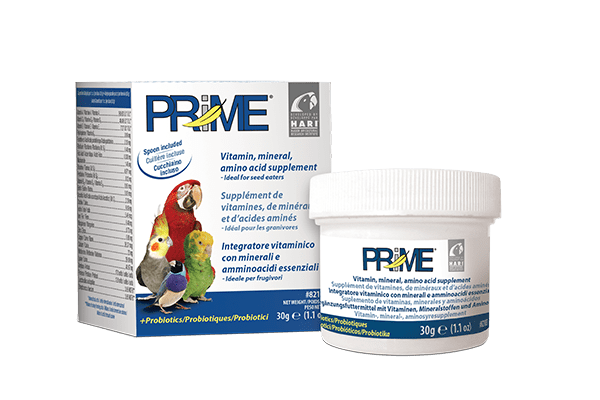
Supplements
*Article to come*
Vitamines
Minerals
Environment/
Enrichment
Les inséparables
Night Cage/ Aviary
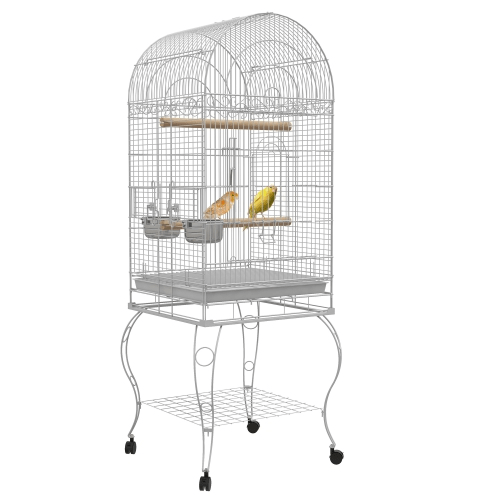
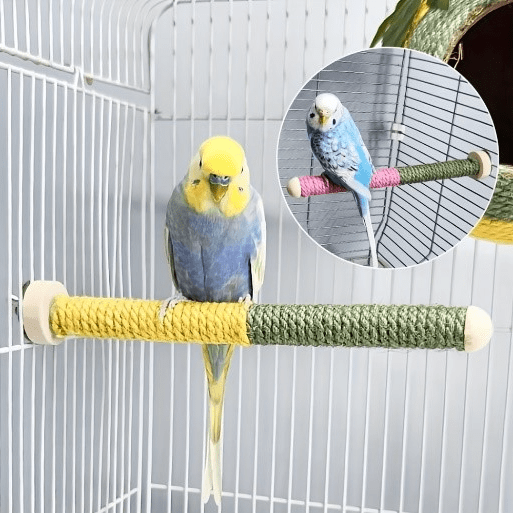
The choice of aviary (cage) must be carefully considered. A lovebird requires a night cage for the safety and well-being of the animal. This place must be comfortable, ventilated and adequately lit, and be a quiet place of refuge.
So, the golden rules for the cage are as follows:
-Cage material plastic, stainless steel and/or powder-coated. Be careful, zinc and lead are toxic.
-Space between bars should be between 3/8″ to ½” (protect from predators, prevent limbs or head damage, etc.)
-Ideally, the bars should be horizontal and not vertical (to make it easier for them to hold)
-Cage size must be at least 20in by 20in by 20in. Calculate an even larger cage if the bird spends a long part of the day inside.
For accessories:
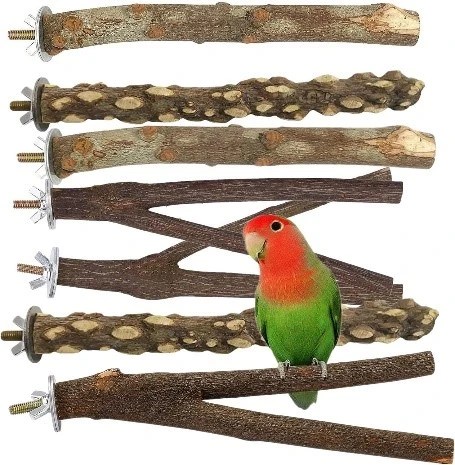
-Have several perches and surfaces of different lengths, diameters and textures. Each well-spaced to allow the inseparable to be able to open its wings without feeling crowded.
Foraging
*Article to come*
In the meanwhile, see Lafeber article which is nicely writing
Et le vidéo de Projet Perroquet
Toys
*Article to come*
-Toys must be checked every day for breakage or defects
**Never use in toys that contain potentially dangerous materials such as zinc, lead, small pieces that can be swallowed (fabric, frayed rope)
House Hazards
*Article to come*
Flight
*Article to come*
Language/
Training
Les inséparables
*Details to come*
Communication
Behavior
Communication
Just like cats and dogs, a birds way of communicating can vary a lot from one individual to another. We all know that parrots are very vocal, but it is crucial to understand its not their only and main way of passing a message. When we talk about body language, a lot of people don’t know how to describe the bird’s.
Here’s an article from Lafeber that is very detailed on general pet bird behavior and body language
FR Voici un vidéo de Projet Perroquet pour des trucs comment renforcir votre belle relation avec votre nouvel oiseau
FR Voici un vidéo de Projet Perroquet qui démontre les postures ‘de confiance’ et les postures ‘d’agression’ pour vous aider à mieux visualiser les concepts. En comprenant mieux notre oiseau, il est possible d’éviter les morsures
Health
Les inséparables
Basic care
*Article to come*
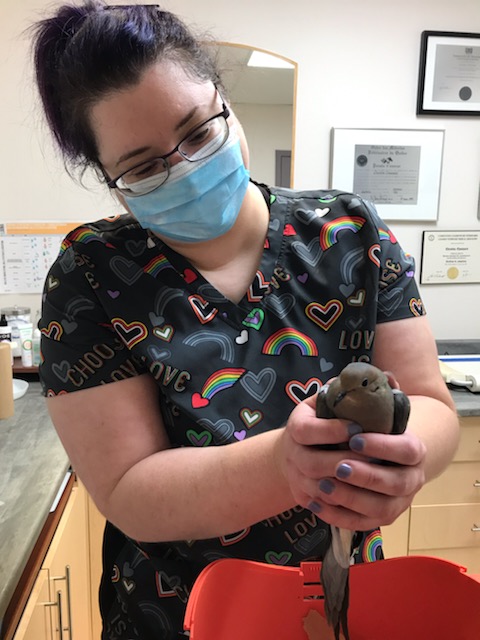
FR Comment tailler les griffes avec un ciseau à griffes: Voir le vidéo descriptif de Pawsitive Plume
Here’s an article from Lafeber that explains nicely general and specific health care.
Illness
*Article to come*
Always call you avian veterinarian first in case of doubt
FR Comment donner un médicament oral: Voir le vidéo descriptif de Pawsitive Plume
FR Voici quelques articles du CHUV sur les maladies communes de nos perroquets:
La maladie du bec et des plumes
Accidents
Always call you avian veterinarian first in case of doubt
*Article to come*
Urgent care
Always call you avian veterinarian first in case of doubt
*Article to come*
Here’s a flyer article from Harrison’s on avian first aid.
Toxic products and plants
*Article come*
FR En attendant, voir l’article du CHUV qui est bien détaillé
 Pawsitive plume